
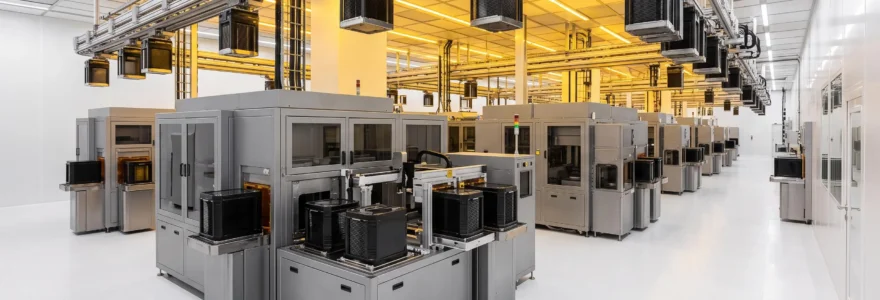
Production engineering managers across the semiconductor sector face an increasingly urgent question: can total automation transform aging production lines into competitive operations without prohibitive investment? The industry’s shift toward lights-out manufacturing promises spectacular improvements in yield, throughput and contamination control by eliminating human intervention entirely. Yet this transformation creates a paradox that few equipment vendors acknowledge in their sales literature.
While 100 per cent robotisation removes the variability and contamination risks associated with human operators, it simultaneously introduces extreme operational fragility. Each robotic handling system becomes a single point of failure whose breakdown can paralyse an entire production line. The viability of full automation depends less on the sophistication of robotic technology than on the capacity to maintain critical equipment operational in an environment with zero tolerance for unplanned downtime.
- The shift to lights-out semiconductor manufacturing
- Why are chipmakers racing toward 100% robotisation?
- The three equipment pillars of fully automated fabs
- How full automation reshapes production economics
- What breaks when robots run the fab?
- Keeping critical equipment operational in zero-downtime environments
- FAQ: Full automation in semiconductor fabs
The shift to lights-out semiconductor manufacturing
Achieving absolute robotic reliability requires moving beyond basic maintenance toward specialized technical restoration. When precision components reach their physical limits, choosing expert technical assistance ensures that fabrication remains continuous and defect-free. Utilizing professional semiconductor robot repair services by Eumetrys Robotics provides the necessary technical depth to maintain yield performance without the extensive delays often associated with standard supply chains.
Lights-out manufacturing refers to semiconductor fabrication that operates without direct human intervention in the cleanroom environment. Unlike partial automation, where robotic systems handle specific tasks whilst operators manage material flow and equipment loading, 100 per cent robotisation eliminates human presence from the entire wafer handling process. Robotic systems control every transfer, every process chamber loading, every quality checkpoint.
This represents the culmination of a gradual evolution. Throughout the 1990s and early 2000s, fabs introduced robots for specific high-precision tasks: wafer transfer between process tools, automated optical inspection, some aspects of metrology. Human operators remained essential for material management, equipment setup, and intervention when automated systems encountered exceptions. The current generation of fully automated fabs extends robotic control across the complete production flow, from wafer cassette arrival through final test.
The UK semiconductor sector operates within particularly challenging competitive dynamics. According to the Semiconductor Sector Study 2026, the UK hosts 705 semiconductor companies generating approximately £10.6 billion in revenue and supporting 26,850 high-value jobs. Yet 89 per cent of dedicated semiconductor firms remain small and medium-sized enterprises, competing against Asian and American fabricators benefiting from substantially larger capital investments.
For British fabs, automation represents not merely an efficiency improvement but a strategic necessity. techUK identifies robotics and automation as critical technologies for building a competitive and sustainable UK semiconductor sector, alongside artificial intelligence, quantum computing and advanced materials. Mid-size fabs face pressure to match the cost efficiency and yield performance of larger competitors whilst operating with constrained investment budgets and aging equipment infrastructure.
The distinction between partial and total automation proves critical for understanding both the promise and the risk. Partial automation allows human operators to compensate when robotic systems fail or encounter unexpected situations. An operator can manually transfer wafers if a handling robot malfunctions, maintaining production flow albeit at reduced throughput. Total automation eliminates this operational flexibility, creating absolute dependency on robotic system reliability.
Why are chipmakers racing toward 100% robotisation?
The technical imperatives driving total automation stem directly from the physics of advanced semiconductor manufacturing. As process geometries shrink below 10 nanometres, a single airborne particle can destroy an entire wafer’s worth of circuits. Human operators, despite full cleanroom garments, remain significant contamination sources. Skin cells, fabric fibres, exhaled moisture—each represents an unacceptable defect risk in sub-10nm fabrication.
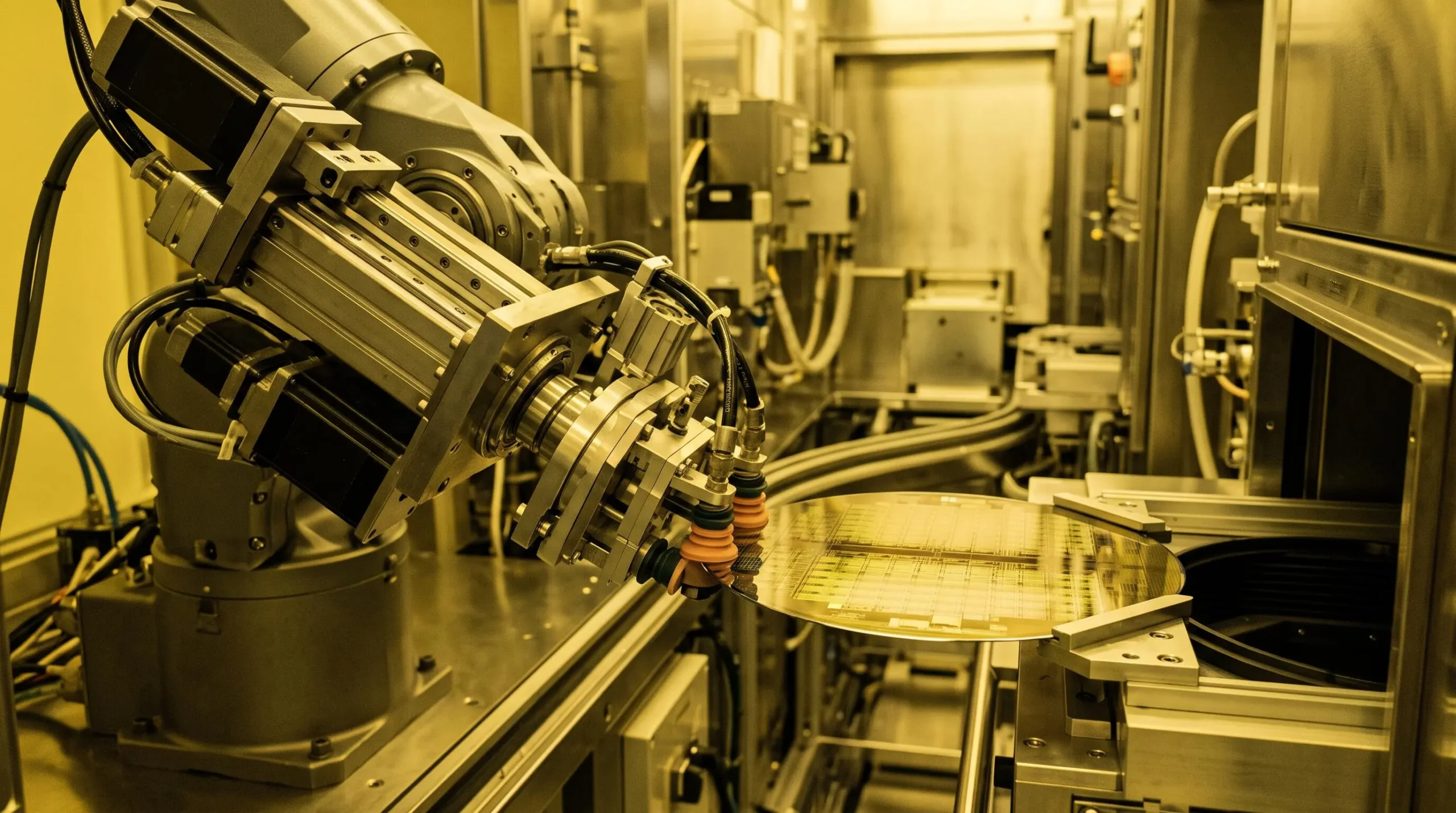
Robotic handling systems deliver micrometric positioning precision with zero variation between shifts, between operators, between morning and evening production. This consistency directly translates to yield improvement. When every wafer receives identical handling, process engineers can isolate genuine process variation from handling-induced defects, accelerating yield learning and reducing time to production maturity.
The operational cost equation appears compelling at first examination. Eliminating cleanroom personnel removes substantial expenses: specialized garments, gowning procedures, training programmes, shift premiums, holiday cover, staff turnover. A fully automated 300mm fab operates continuously without fatigue, without shift changeovers, without the productivity variations inherent in human operations. Throughput increases as robotic systems execute material transfers and equipment loading faster and more reliably than manual operations permit.
These advantages prove genuine and measurable. The challenge lies in the conditionality that equipment vendors’ presentations often minimize: all benefits depend entirely on maintaining robotic systems operational. The same elimination of human intervention that delivers contamination control and yield improvement also removes the operational flexibility that allows experienced operators to work around equipment issues, maintain production flow during minor faults, and provide rapid initial diagnosis when systems fail.
Understanding the principles of industrial automation helps contextualize these trade-offs within broader manufacturing transformation trends, though semiconductor fabrication presents unique reliability requirements given the extreme cost of process interruption.
The three equipment pillars of fully automated fabs
Total fab automation rests on three categories of robotic equipment, each presenting distinct failure modes and maintenance requirements. Understanding their interdependencies proves essential for evaluating automation viability.
Wafer handling robots form the central nervous system of automated fabrication. These precision mechanisms transfer individual wafers between process equipment, metrology tools, and storage. They must maintain positioning accuracy within micrometres across millions of transfer cycles, operating in chemically aggressive cleanroom environments. Mechanical wear affects multiple subsystems: vacuum gripper seals degrade, linear guide bearings accumulate particulate contamination, rotary encoders drift from calibration. Each degradation mode potentially introduces wafer positioning errors that compromise process quality or, worse, cause wafer breakage that contaminates equipment and halts production.
Loadports and FOUP management systems provide the interface between automated material handling and process tools. A loadport opens the sealed Front Opening Unified Pod (FOUP) that protects wafers during storage and transport, allowing the wafer handling robot to access individual wafers. Loadport failures prevent access to entire lots of wafers, blocking production even when process equipment and handling robots remain fully functional. Common failure modes include door mechanism jams, FOUP identification sensor faults, and communication protocol errors that prevent coordination between loadport and process tool.
Pre-aligners verify and correct wafer orientation before process steps requiring precise angular positioning. These systems use optical sensors to detect wafer notch or flat position, then rotate the wafer to the specified orientation. Pre-aligner degradation proves particularly insidious because it rarely causes immediate production stoppage. Instead, positioning accuracy deteriorates gradually, introducing systematic process variation that manifests as yield loss. Operators may spend weeks troubleshooting process equipment before discovering that pre-aligner calibration drift causes the fundamental problem.
Complete automated wafer handling cycle: The FOUP arrives at the loadport via overhead transport system. The loadport identifies the FOUP, verifies correct lot, and opens the sealed door. The wafer handling robot extends into the FOUP, grasps a single wafer with vacuum gripper, and transfers it to the pre-aligner. The pre-aligner verifies wafer orientation and rotates to correct position. The robot then transfers the aligned wafer into the process tool chamber. After processing completes, the sequence reverses. Any component failure in this chain halts the entire production flow.
These three equipment categories function as an integrated system. The reliability of the complete automation solution equals the reliability of its weakest link. A fab might maintain wafer handling robots impeccably whilst overlooking pre-aligner calibration maintenance, undermining the yield benefits that justified automation investment. Conversely, a single catastrophic robot failure negates the benefits of perfectly maintained loadports and pre-aligners, as wafers cannot move between process steps.
Equipment specifications typically cite Mean Time Between Failures (MTBF) measured in thousands of hours, implying years of reliable operation. These figures describe individual component reliability under ideal conditions. A complete automated fab contains dozens of wafer handling robots, hundreds of loadports, and numerous pre-aligners. The probability that at least one critical component requires intervention increases substantially with system scale.
How full automation reshapes production economics
Evaluating the economic case for total automation requires examining multiple metrics that interact in complex ways. Throughput, yield, cost per wafer, and time-to-market all shift when human intervention disappears from the cleanroom. The challenge lies in accounting honestly for both improvements and newly introduced costs.
Throughput improvement stems from continuous operation and optimized material flow. Robotic systems execute wafer transfers in consistent cycle times, eliminating the variability of human operators. Automated scheduling software optimizes equipment utilization, moving wafers to available process tools without waiting for operator availability. The fab operates 24 hours daily, 365 days yearly, without shift changeovers or reduced weekend staffing. For fabs facing capacity constraints, this represents substantial value.
Yield benefits follow from contamination reduction and handling consistency. Fewer defects mean higher percentages of functional die per wafer, directly reducing cost per good die. For established processes, even modest yield improvements generate significant margin expansion. A five percentage point yield increase can swing a marginally profitable process to healthy profitability, or transform a development process into production viability.
The cost per wafer calculation, however, demands careful scrutiny. Labour cost reduction proves straightforward to quantify: eliminated headcount, reduced cleanroom garment expenses, lower training costs. The corresponding maintenance cost increases prove harder to forecast accurately. Fully automated fabs require intensive preventive maintenance programmes to achieve the reliability that justifies automation investment. Robotic systems need regular calibration, seal replacement, bearing service, and software updates. These activities require specialized technicians, expensive spare parts inventories, and often involve original equipment manufacturer service contracts.
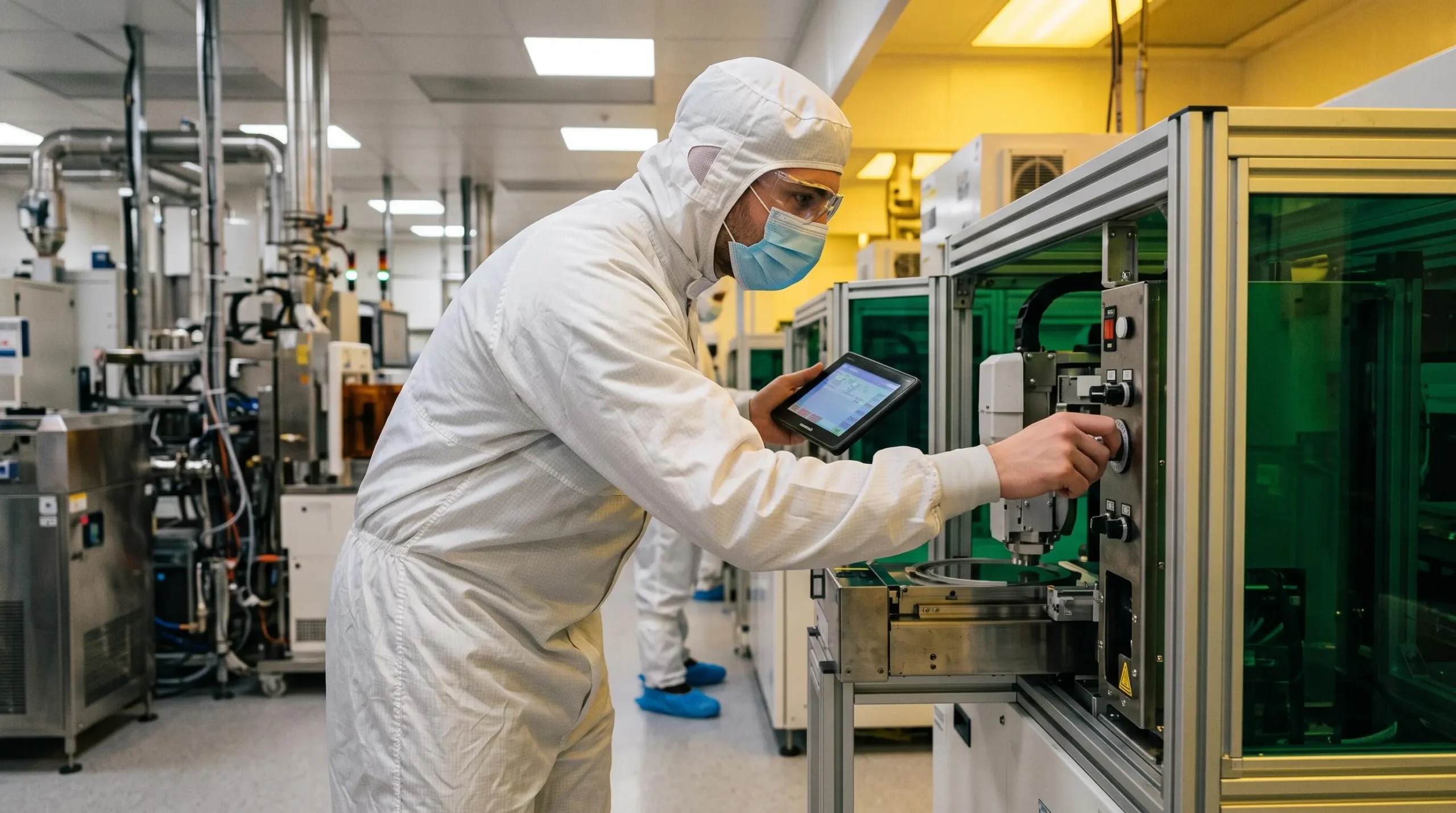
Time-to-market advantages emerge from operational consistency and data quality. Automated fabs generate comprehensive process data from every wafer movement and process step, enabling faster yield learning and process optimization. When customer demand spikes, automated operations scale immediately without recruiting and training additional operators. This responsiveness provides competitive advantage in markets where product lifecycles measure in months rather than years.
The economic analysis must account for costs that traditional return-on-investment calculations frequently underestimate. Original equipment manufacturer dependency intensifies in fully automated environments. When proprietary robotic systems fail, fabs often discover limited alternatives to expensive OEM service contracts and lengthy spare parts lead times. Equipment obsolescence introduces particular risk: manufacturers discontinue support for older automation equipment, leaving fabs facing difficult choices between costly complete system replacement and attempting to maintain unsupported equipment.
According to research on UK and Irish manufacturers, facilities spend an average of 20 hours weekly on unscheduled maintenance, with 82 per cent experiencing at least one unplanned downtime incident over a three-year period. Whilst this data encompasses broader manufacturing sectors, it underscores the maintenance burden that automation introduces rather than eliminates. Semiconductor fabs face particularly acute consequences from unplanned downtime given the high value of work-in-process and the tight customer delivery schedules that characterize the industry.
What breaks when robots run the fab?
The concept of single point of failure amplification distinguishes total automation from partial automation in ways that profoundly affect operational risk. In a partially automated fab, human operators provide redundancy and adaptability. When a wafer handling robot malfunctions, operators can manually transfer wafers to maintain production, accepting reduced throughput until repairs complete. In a lights-out fab, no such compensation exists. A single robot failure stops the entire production sequence that depends on that specific handling system.
Mechanical failures follow predictable patterns but arrive at inconvenient moments. Robotic arm bearings wear gradually, introducing positioning errors that initially fall within acceptable tolerances but eventually exceed specification limits. Vacuum gripper seals harden and crack, losing the consistent grip force required for reliable wafer handling. Calibration drifts accumulate from thermal cycling, mechanical wear, and the micro-shocks of millions of movement cycles. Each failure mode presents different diagnostic challenges and repair complexities.
Consider a specific scenario: a wafer handling robot experiences vacuum gripper failure at 3:00 on a Sunday morning. The fab’s automated monitoring system detects the fault and alerts the on-call maintenance engineer. The engineer remotely accesses diagnostic systems, confirms gripper seal failure, and checks spare parts inventory. The required seal type sits in a storage cabinet—but only two remain in stock, below the minimum threshold. The engineer replaces the failed seal, restoring operation within two hours. However, the inventory shortfall triggers an urgent spare parts order that reveals an uncomfortable reality: the seal manufacturer discontinued this component six months ago, and the equipment OEM now recommends complete gripper assembly replacement at ten times the seal cost.
Critical vulnerability in lights-out operations: Single point of failure amplification means each critical robotic component becomes as essential as a vital organ. In partially automated fabs, human intervention provides operational redundancy when equipment fails. Total automation eliminates this safety net, making every wafer handling robot, every loadport, every pre-aligner an absolute dependency whose failure immediately halts production. The more sophisticated the automation, the more fragile the overall system becomes to individual component failures.
Software and communication failures introduce distinct challenges. The SECS/GEM protocols that coordinate equipment communication occasionally encounter timing conflicts, protocol version mismatches, or corrupted data packets that desynchronize the automated material handling system. Unlike mechanical failures that produce obvious symptoms, software issues may cause intermittent faults that prove difficult to reproduce and diagnose. A fab might experience sporadic wafer misplacements or lost tracking data without clear indication of root cause.
The cascade effects of individual failures amplify economic impact. When a loadport fails during wafer processing, the wafers inside the process tool complete their cycle successfully, but the completed wafers cannot return to their FOUP for storage. The process tool sits idle, waiting for loadport repair, whilst wafers queue in upstream process steps, and downstream equipment starves for incoming material. A two-hour loadport repair might cause eight hours of production disruption across multiple process tools.
Unplanned downtime costs multiply beyond immediate lost production. Wafers in process during equipment failures may require scrapping if interruption times exceed process specifications. Customer delivery commitments slip, potentially incurring penalty clauses or jeopardizing future orders. Engineering resources divert from improvement projects to firefighting mode. The cumulative cost of a single critical failure can exceed many times the direct repair expense.
Keeping critical equipment operational in zero-downtime environments
Preventive maintenance transitions from recommended best practice to operational necessity in fully automated fabs. The absence of human operators who might notice subtle equipment degradation means automated monitoring systems must detect incipient failures before they cause breakdowns. This requires investment in predictive maintenance technologies and the discipline to perform scheduled interventions even when equipment appears to function normally.
Vibration analysis detects bearing wear and mechanical imbalances before they cause catastrophic failure. Accelerometers mounted on robotic arm joints continuously monitor vibration signatures, comparing current patterns against baseline measurements. Gradual increases in vibration amplitude or changes in frequency content indicate developing mechanical problems, triggering maintenance interventions during scheduled downtime rather than forcing unplanned production interruptions.
Thermographic monitoring identifies thermal anomalies that suggest electrical connection degradation, motor bearing problems, or cooling system inadequacies. Regular thermal imaging surveys of robotic systems reveal hot spots that indicate components operating outside normal temperature ranges, providing early warning of potential failures.
Calibration drift tracking proves particularly critical for pre-aligners and positioning systems. Automated statistical process control charts monitor positioning accuracy over time, detecting gradual degradation that might otherwise escape notice until yield impacts become severe. When trending indicates approaching specification limits, maintenance schedules preemptive recalibration rather than waiting for out-of-specification operation.
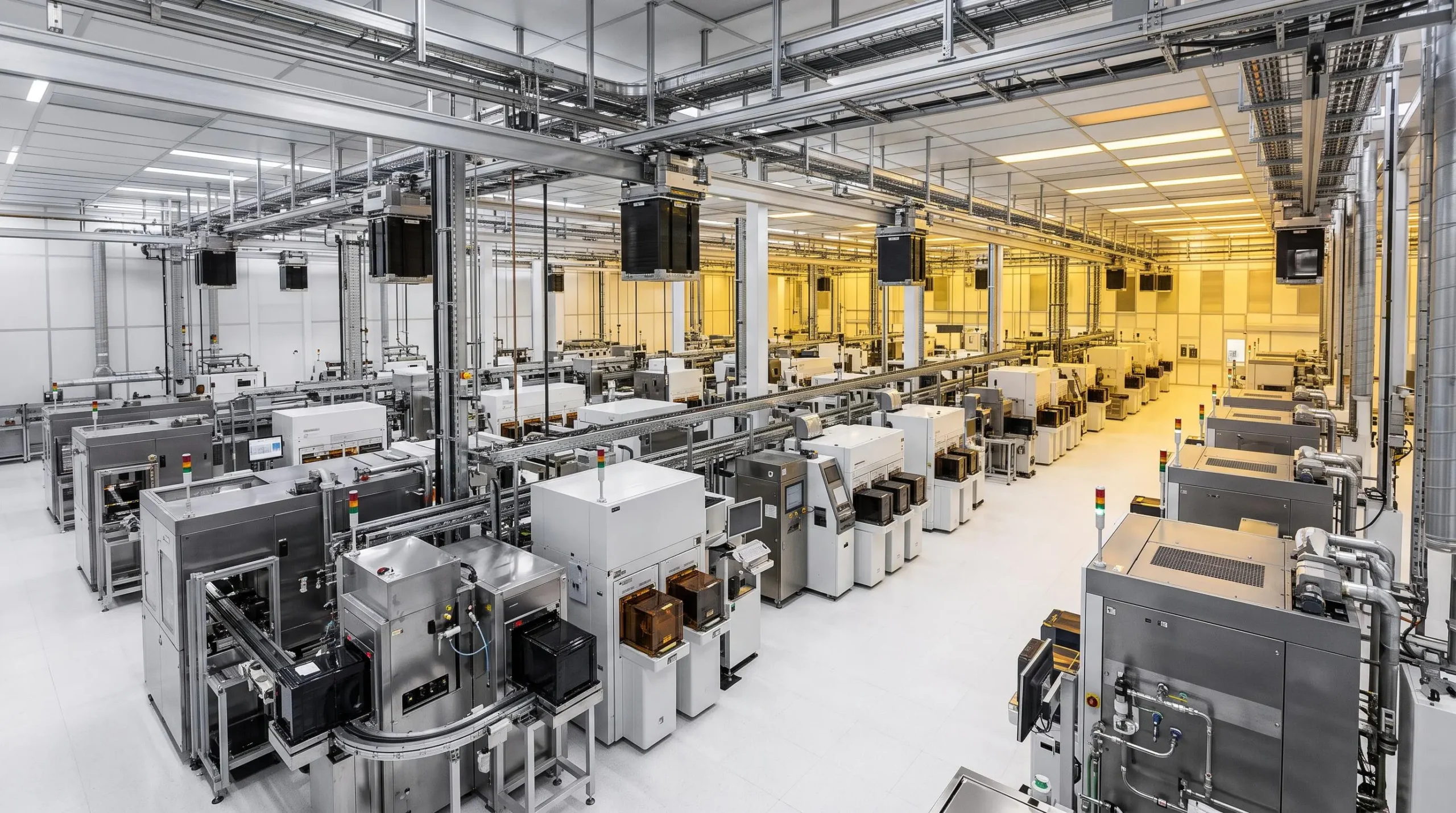
The dilemma between rapid repair and complete replacement confronts every fab managing aging automation equipment. When a critical component fails, waiting several weeks for OEM spare parts delivery proves economically unacceptable. The alternative—complete equipment replacement—often exceeds available capital budgets and requires extended production downtime for installation and qualification.
Specialized refurbishment and repair services offer a middle path between these extremes. Third-party service providers specializing in semiconductor equipment can provide rapid repair and reconditioning services for wafer handling robots and loadports, substantially reducing intervention times compared to OEM supply chains whilst delivering reliable performance at lower cost than new equipment purchase. For fabs operating equipment where OEM support has ended, specialized repair services may represent the only viable alternative to forced equipment replacement.
Obsolescence management becomes increasingly critical as automation equipment ages. Original equipment manufacturers typically maintain spare parts availability for seven to ten years after product discontinuation, then phase out support as remaining installed base shrinks. Fabs face strategic decisions: maintain extensive spare parts inventories to support equipment beyond OEM support periods, accept forced upgrades when support ends, or develop relationships with third-party service providers capable of refurbishing components and reverse-engineering unavailable spare parts.
The economic calculus favours refurbishment in many circumstances. A complete wafer handling robot replacement might cost £150,000 to £250,000 including installation and qualification, with six to twelve weeks lead time. Specialized repair services can refurbish failed robots to OEM specifications in one to two weeks at a fraction of replacement cost. For mid-size fabs with constrained capital budgets, this cost differential proves decisive.
FAQ: Full automation in semiconductor fabs
Can existing fabs transition to full automation?
Technical feasibility depends on fab architecture, process equipment generation, and infrastructure compatibility. Retrofitting total automation requires sufficient cleanroom height for overhead transport systems, equipment front-end modules compatible with automated material handling, and process tools supporting SECS/GEM communication protocols. Most critically, transition demands extended production shutdown for installation and qualification—economically unacceptable for many operating fabs. Progressive automation by production area offers more practical migration path, though this extends project timelines and capital investment periods. Budget constraints typically prove more limiting than technical barriers for mid-size fabs considering automation upgrades.
What happens when a critical robot fails in a lights-out fab?
Production halts immediately for all process steps dependent on the failed handling system. Automated monitoring alerts maintenance personnel, who perform remote diagnosis when possible. If diagnosis confirms hardware failure, technicians must enter the cleanroom for hands-on repair. Downtime duration depends entirely on spare parts availability—ranging from one to two hours for stocked components to several weeks when parts require OEM ordering. Work-in-process wafers may require scrapping if hold-time specifications expire during extended downtime. The cascade effect typically impacts multiple process tools and downstream operations, multiplying the economic cost beyond the direct repair expense.
How long does automated wafer handling equipment typically last?
Well-maintained robotic handling systems can operate 10 to 15 years before requiring major refurbishment or replacement, assuming proper preventive maintenance programmes. However, OEM support availability often determines practical equipment lifetime more than technical wear-out. Manufacturers typically discontinue spare parts support seven to ten years after product discontinuation, forcing fabs to choose between maintaining extensive parts inventories, accepting third-party repair services, or replacing still-functional equipment. Mean Time Between Failures for individual components varies substantially—vacuum gripper seals might require annual replacement whilst structural components last decades—making system-level reliability dependent on comprehensive maintenance rather than individual component longevity.
Does full automation eliminate the need for cleanroom staff?
Automation eliminates routine operational staff but increases requirements for specialized maintenance technicians, automation engineers, and process control specialists. The skill profile shifts from operators executing procedural tasks to technical experts maintaining complex robotic systems, diagnosing automation failures, and optimizing integrated material handling. Many fabs discover that total headcount reduction proves smaller than initial projections suggested, though labour costs may still decrease as specialized technical roles often require fewer total personnel than shift-based operations teams. The critical difference lies in vulnerability to key personnel loss—fabs become dependent on small numbers of highly specialized staff whose expertise proves difficult to replace.
What are the hidden costs of maintaining fully automated fabs?
Preventive maintenance intensity increases substantially compared to partially automated operations, requiring regular calibration services, scheduled component replacements based on cycle counts rather than failure, and comprehensive spare parts inventories for critical systems. OEM service contracts for proprietary robotic systems often cost considerably more than fabs anticipate during initial automation business cases. Software license fees, protocol version upgrades, and cybersecurity requirements add ongoing expenses. Training costs remain significant despite reduced operator headcount, as maintenance personnel require continuous education on evolving automation technologies. Most significantly, the economic impact of unplanned downtime escalates dramatically when no manual workaround exists, making reliability-related costs—redundant systems, premium service contracts, extensive spare parts stocks—essential investments rather than optional enhancements.
The transformation toward total fab automation represents genuine technological progress, delivering measurable improvements in contamination control, yield consistency, and operational throughput. Yet success depends critically on maintaining equipment reliability in environments with zero tolerance for failure. Mid-size fabs evaluating automation investments must assess not only initial capital requirements but their capacity to sustain intensive preventive maintenance programmes, manage equipment obsolescence, and respond rapidly to critical failures.
The single point of failure amplification inherent in lights-out manufacturing means automation viability depends more on maintenance strategy and supplier relationships than on robotic sophistication. Fabs that develop comprehensive equipment lifecycle management—including predictive maintenance capabilities, strategic spare parts inventories, and access to rapid repair services when OEM support proves inadequate—position themselves to realize automation benefits whilst managing inherent fragility. Those that focus exclusively on initial automation investment whilst underestimating ongoing maintenance intensity risk discovering that theoretical operational savings vanish into unplanned downtime costs and emergency repair expenses.
For production managers facing automation decisions with limited budgets and aging equipment, the path forward lies in honest assessment of maintenance capabilities and realistic evaluation of equipment reliability requirements. Total automation delivers substantial benefits, but only when supported by operational infrastructure capable of maintaining critical systems in continuous operation. Understanding this dependency transforms the automation question from whether to how—specifically, how to build maintenance capabilities that match automation ambitions. Exploring an overview of automation in modern industries provides broader context for these decisions within the larger industrial transformation currently reshaping manufacturing globally.